Football video games transformed supporters from spectators into virtual players and managers. Explore how console classics, career modes, online play, and player ratings helped reshape global fan culture.
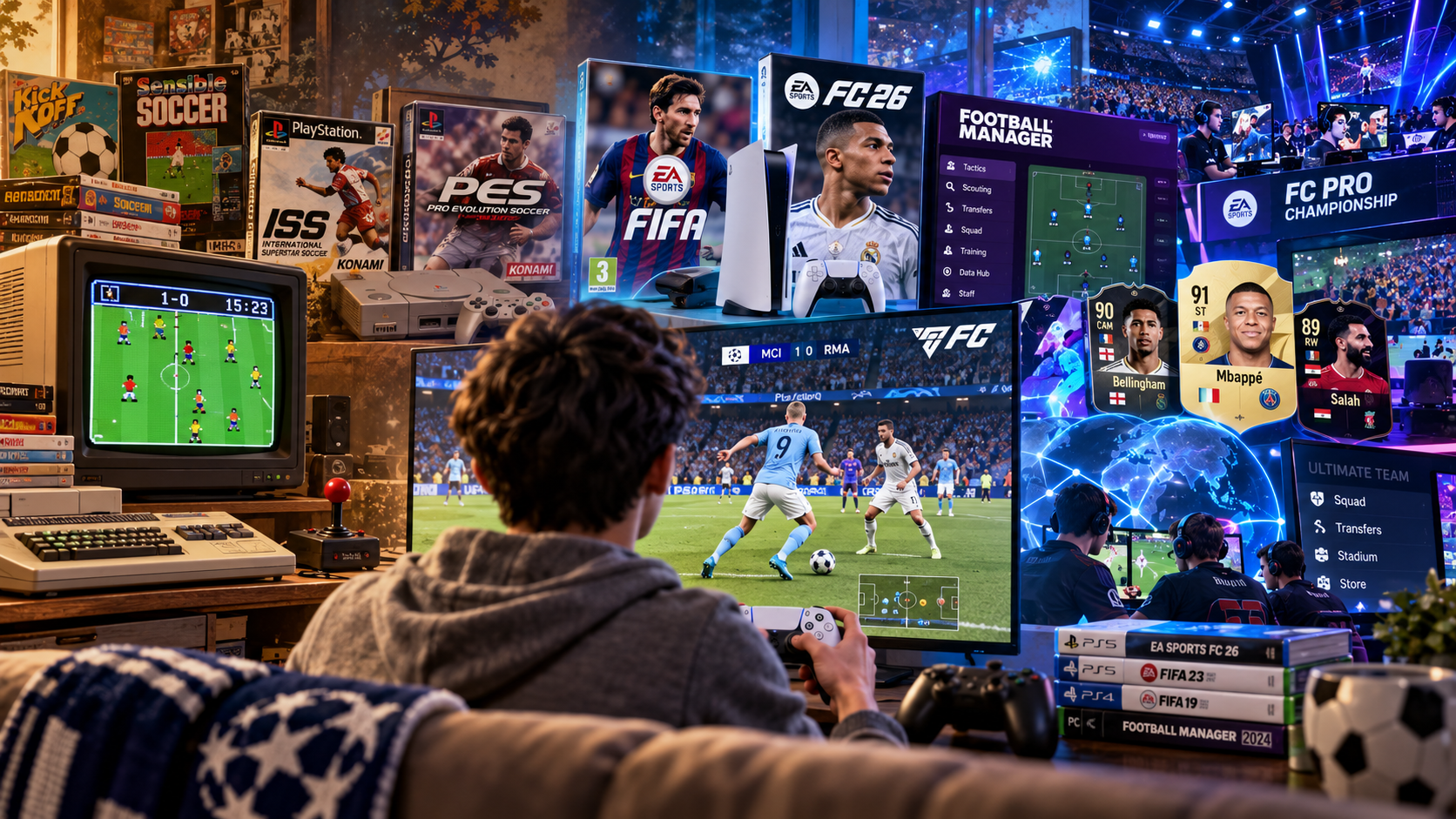
What looks settled today was shaped by experimentation. The Early home-computer era entry shows that football games translated the sport into simple rules and limited graphics; the Live-service era entry shows that regular updates, digital items and esports linked games continuously to the real season. The contrast makes the intermediate choices easier to understand.
Written by: SwiftPeakX Editorial Team
Last editorial review: October 2026
Editorial note: This article was reviewed for topic-specific wording, historical clarity, source transparency and natural readability. References are listed at the end for verification and further reading.
Key Takeaways
Football games let supporters perform roles—player, manager, scout or squad builder—that television cannot offer.
Licensing, player databases and ratings helped games become a parallel source of football knowledge.
Online modes turned solitary play into competitive communities with their own economies and rituals.
Research increasingly treats football gaming as part of football culture rather than as a separate niche.
Historical Foundations
Football video games allowed supporters to do something television could not: control the match. Early titles were technically simple, but they introduced generations of fans to the pleasure of choosing teams, scoring virtual goals, and replaying imagined fixtures. As consoles improved, licensed clubs, player names, stadiums, commentary, and recognizable tactics made the experience feel increasingly connected to real football.
Games also became a form of football education. Young fans learned players from foreign leagues, discovered formations, encountered clubs they had never watched live, and absorbed transfer-market logic through career modes. Management simulations went even deeper, turning scouting databases and tactical decisions into entertainment.
Online play changed the social dimension. Supporters could compete across countries, build digital squads, follow esports competitions, and discuss ratings or game mechanics as seriously as real-life selections. The boundary between football fandom and gaming culture became porous.
A rating number can simplify a complex footballer into attributes such as pace, passing, shooting, or strength. Those categories are useful for gameplay but can influence real-world debate, especially among younger fans. Video games have therefore become one of the lenses through which footballers are discovered and compared. They do not replace watching matches, but they shape expectations, vocabulary, and the global familiarity of players far beyond their domestic leagues.
Why interactivity changes fandom
Watching a match asks the supporter to interpret decisions; playing a game asks the supporter to make them. That shift creates a different relationship with tactics, formations and player attributes.
A fan may learn the name of a young midfielder because a game makes that player useful long before mainstream coverage does. Digital football therefore acts as both entertainment and an informal knowledge system.
Ratings became part of football conversation
Player ratings simplify complex performance into numbers, which makes them easy to compare and debate. Fans often treat a rating as a claim about status even when the number is produced for game balance rather than scientific truth.
Arguments over pace, shooting or potential reveal how strongly gaming language has entered ordinary football talk. The game does not merely copy football; it provides categories through which supporters discuss it.
Management games reward different knowledge
Titles such as Football Manager emphasize scouting, squad planning and long-term decision-making rather than direct control of a player on the pitch. That structure attracts supporters who enjoy systems and information as much as reflexes.
Academic work has linked these games with broader football conversations and social networks. The pleasure comes partly from feeling responsible for an alternative football world built from recognizable real data.
Online play created new communities
Connected competition lets supporters build identities around clubs, modes, platforms and skill levels that may have little to do with geographic location. Streaming and esports add audiences around the act of playing itself.
These communities can deepen engagement with real football while also producing their own rivalries and norms. A supporter can now spend as much football time in digital spaces as in stadiums or broadcast discussions.
The commercial relationship is complicated
Licensing gives games authenticity, while game publishers provide clubs and players with enormous global visibility. At the same time, live-service economies can encourage repeated spending and blur the line between collecting, competition and monetization.
Fans therefore experience football gaming as both culture and commerce. That tension mirrors the wider sport, where identity and business often grow together rather than separately.
Timeline: Key Turning Points
Period Development Why It Mattered
Early home-computer era Football games translated the sport into simple rules and limited graphics. Interactivity mattered more than realism.
Console expansion Improved graphics, controls and licensing made digital football more recognizable. Players could inhabit clubs and competitions they followed on television.
Management simulation era Database-heavy games made recruitment, tactics and squad building central. Fans learned players and leagues through simulated decision-making.
Online era Multiplayer and connected modes created persistent communities. Football gaming became social and competitive beyond the living room.
Live-service era Regular updates, digital items and esports linked games continuously to the real season. The boundary between football media, gaming and fan participation became more porous.
Why This Still Matters
Football video games do more than reproduce matches. They teach formations, player names, transfer logic and statistical categories to people who may never encounter those ideas through coaching. Career modes and online competition also let fans experiment with decisions that are impossible from the stands. The relationship runs both ways: real football increasingly borrows visual language and data expectations that game audiences already understand. That crossover helps explain why virtual football has become part of fandom rather than a separate entertainment niche.
Licensing and branding have also made football games historical documents of a kind. Kits, stadiums, squads, commentary styles and interface design preserve how a season looked and felt, even when the simulation itself is imperfect. Older titles can trigger nostalgia in the same way as archive broadcasts. That does not make a game an authoritative record, but it shows why football’s digital history now includes software as well as photographs, programmes and match footage.
Online modes intensified this relationship by turning football games into social spaces. Players no longer competed only against the computer or friends in the same room; they entered persistent global communities with rankings, seasonal updates and shared tactical trends. That shift made the virtual version of football more closely resemble a live service than a finished product on a disc, and it tied fan culture to continuing software changes throughout the real season.
Common Misconceptions
Football video games only imitate real football.
They also create their own language, communities and expectations that feed back into fandom.
Gaming makes supporters less engaged with the real sport.
Research has found more complex relationships, with games often operating alongside other forms of football participation and engagement.
Player ratings are objective scouting grades.
They are design choices shaped by data, interpretation and game balance, not official measurements of a player’s total quality.
Related SwiftPeakX Reading
Goal Celebrations: How Scoring Became a Language of Emotion and Identity
Football Club Mottos: The Words That Define Identity, Ambition, and Tradition
Why Footballers Swap Shirts: The History and Meaning of a Global Sporting Ritual
Frequently Asked Questions
Why do fans learn so many players through football games?
Large licensed databases expose users to leagues and prospects they may not encounter regularly in broadcasts.
How did online play change football gaming?
It transformed local or solo play into persistent competition, social communities and esports.
Why is Football Manager important to fan culture?
Its database-driven format lets supporters inhabit the role of manager and scout, linking game knowledge with real football conversation.
Do football games influence how fans judge real players?
They can, especially when ratings and potential scores become shorthand in online discussion, though real performance is far more complex.
Video Games Changed How Fans Learn Football
The opening phase is labeled Early home-computer era. Football games translated the sport into simple rules and limited graphics. Interactivity mattered more than realism.
The sequence moves next to Console expansion. Improved graphics, controls and licensing made digital football more recognizable. Players could inhabit clubs and competitions they followed on television.
The sequence continues with Management simulation era. Database-heavy games made recruitment, tactics and squad building central. Fans learned players and leagues through simulated decision-making.
The chronology then reaches Online era. Multiplayer and connected modes created persistent communities. Football gaming became social and competitive beyond the living room.
The last stage shown here is Live-service era. Regular updates, digital items and esports linked games continuously to the real season. The boundary between football media, gaming and fan participation became more porous.
The Bottom Line
The modern version of From Console Classics to Online Play is best seen as one point on a longer continuum. From the Early home-computer era stage through Live-service era, the subject changed whenever football needed a better fit between rules, institutions, technology and experience. That history leaves room for further evolution without assuming every innovation is progress.
Sources & Further Reading
Bangor University — Football videogames and fandom
Emerald — Millennial football fan participation and video games
Abertay University — View from the virtual terraces