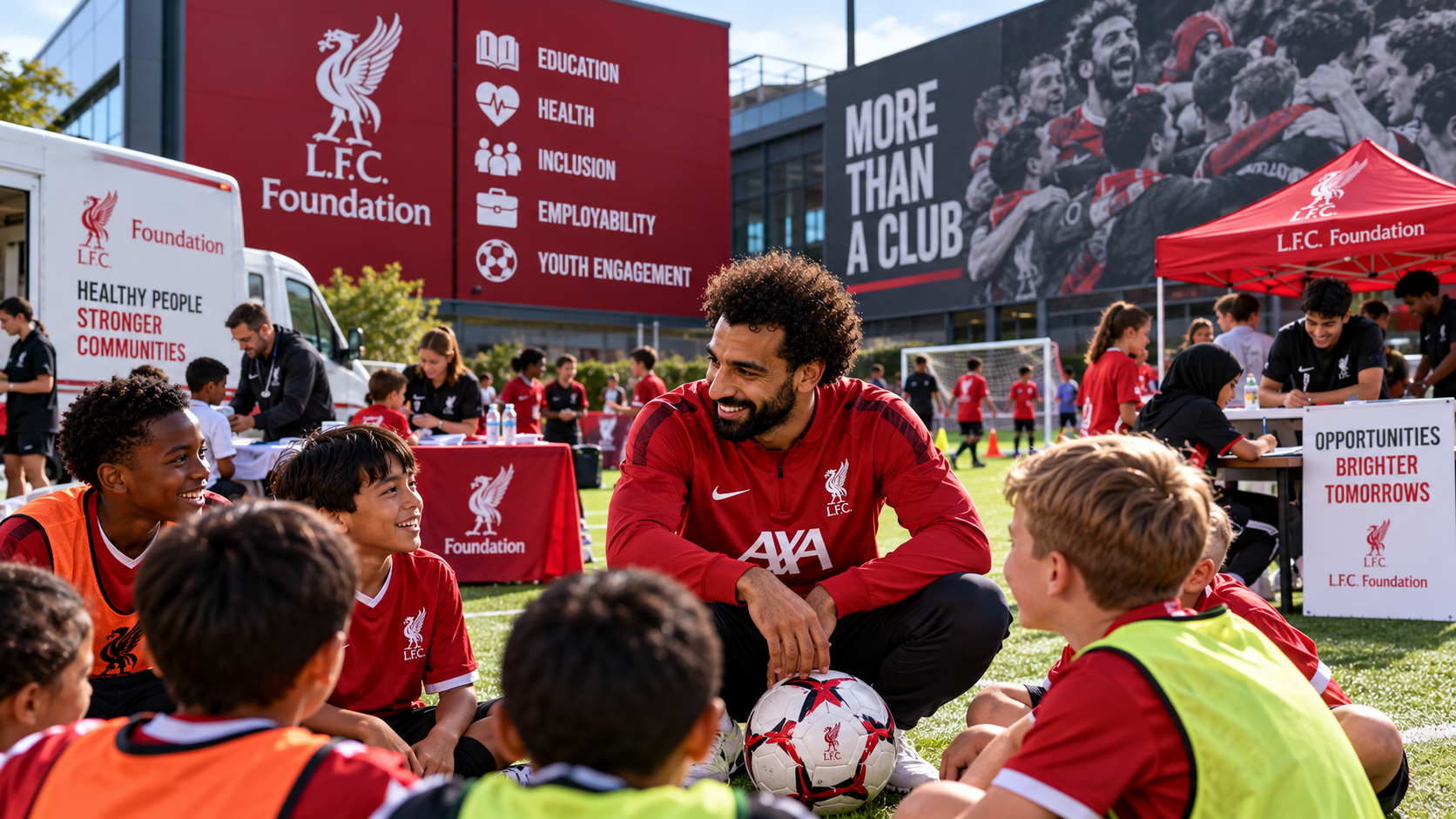
Many football clubs now operate foundations and community programs far beyond the pitch. Discover how clubs use their reach to support education, health, inclusion, employability, and local social initiatives.
What looks settled today was shaped by experimentation. The Early charitable activity entry shows that players and clubs supported local causes through visits, fundraising and informal projects; the Modern social role entry shows that projects cover health, employability, disability sport, inclusion, education and youth engagement. The contrast makes the intermediate choices easier to understand.
Written by: SwiftPeakX Editorial Team
Last editorial review: October 2026
Editorial note: This article was reviewed for topic-specific wording, historical clarity, source transparency and natural readability. References are listed at the end for verification and further reading.
Key Takeaways
Community work gives clubs a role in local life that is not dependent on results on the pitch.
Dedicated foundations professionalized delivery through staff, partnerships, safeguarding and measurable programmes.
The club badge can help programmes reach participants who may not respond to traditional institutions.
Credibility depends on evidence of impact; community activity should be more than reputation management.
Historical Foundations
Football clubs have long participated in local charitable activity, but many now operate dedicated foundations or community departments. These organizations use the club’s name, facilities, staff, and public reach to support programs in education, health, inclusion, employability, disability sport, and youth development.
The logic is straightforward: a club can engage people whom traditional institutions sometimes struggle to reach. A child may attend a literacy program because it carries the badge of a favorite team; an adult may join a health initiative because it takes place at the stadium or training ground.
Community work also creates questions about accountability. Clubs can gain reputational value from social programs, so impact should be measured rather than treated as public relations alone. Strong foundations publish objectives, partnerships, participation numbers, and evaluations where possible.
A football club can outlive owners, coaches, and generations of players. In many places it becomes part of local identity, which creates expectations beyond winning matches. Community programs are one way clubs respond to that social position. They cannot solve every local problem, but they can use trust, visibility, and physical infrastructure to convene people around practical support.
Why the club badge can open doors
Football clubs possess emotional trust and recognition that public agencies may not always have with every group. A teenager who ignores a generic workshop may engage when the same activity is delivered by the club they support.
That access is the foundation’s distinctive asset. The challenge is to convert attention into genuine educational, health or social outcomes rather than simply attendance.
Professionalization changed community work
A dedicated foundation can employ programme managers, coaches, safeguarding staff and evaluators instead of relying only on occasional charity events. That allows projects to run year-round and specialize by audience. That makes professionalization changed community work a genuine turning point in the wider story of Beyond the Match rather than a minor historical detail.
Formal governance also creates accountability around funding and child protection. The shift mirrors professional football more broadly: goodwill becomes more effective when supported by structure.
Partnership matters more than the club working alone
Health, education and employment problems are too complex
The club contributes reach and engagement while partners contribute specialist expertise. This prevents football branding from being mistaken for professional competence in areas that require trained practitioners.
How impact should be judged
Counting participants is useful but does not reveal whether a programme improved attendance, health behavior, confidence or employment outcomes. Better evaluation links activities to explicit objectives and follows change over time where possible.
Independent evidence can be more credible than promotional stories alone. A foundation earns trust when it is willing to measure what did not work as well as what did.
Community programmes also shape club identity
Supporters may judge a club partly by how it treats the place whose name and history it carries. Long-term community presence can outlast owners, coaches and star players.
That creates a form of legitimacy that cannot be purchased only through sponsorship. The strongest foundations make social work part of institutional behavior rather than a campaign activated when reputation needs repair.
Timeline: Key Turning Points
Period Development Why It Mattered
Early charitable activity Players and clubs supported local causes through visits, fundraising and informal projects. Community engagement existed before formal foundations.
Foundation era Clubs created dedicated charitable arms and community departments. Delivery became more professional and continuous.
Partnership era Programmes increasingly worked with schools, health services, councils and NGOs. Football became a platform connecting institutions.
Impact-measurement era Funders and communities asked for evidence of outcomes rather than activity counts alone. Evaluation became part of credibility.
Modern social role Projects cover health, employability, disability sport, inclusion, education and youth engagement. The club’s social footprint extends far beyond matchday.
Why This Still Matters
Community work changes the meaning of a football club’s local presence. Foundations and social programs can use the club’s badge, facilities and visibility to reach people who may not respond to conventional institutions in the same way. The strongest programs are judged by outcomes rather than publicity, which requires trained staff, partnerships and long-term evaluation. That distinction matters because community activity can be both socially valuable and reputationally useful; credibility depends on whether the work continues when there is no immediate marketing benefit.
Measurement is increasingly important to credible community work. Participation numbers can show reach, but they do not automatically prove that a program improved health, education or social inclusion. Strong foundations therefore need goals that can be evaluated over time and partnerships with organizations that understand the communities being served. That makes the work less glamorous than a one-off campaign, but far more likely to create durable value.
Common Misconceptions
Club foundations are only public-relations departments.
They can generate reputational value, but many deliver substantial programmes with professional staff and external partners.
A football club can solve local social problems on its own.
Effective programmes usually depend on specialist partners and public services.
Participation numbers prove impact.
Attendance is only one measure; outcomes and quality matter as well.
Related SwiftPeakX Reading
From Message Boards to Matchday Threads: How Online Communities Changed Football Fandom
Football Friendships: Why Supporters Sometimes Form Bonds Across Club Lines
Fan Zones: How Public Viewing Spaces Changed the Way Supporters Gather
Frequently Asked Questions
What does a football club foundation usually do?
Programmes vary but commonly include education, health, inclusion, employability, disability sport and youth engagement.
Why set up a separate charitable foundation?
A dedicated structure can improve governance, fundraising, specialist staffing and transparency around community work.
How can clubs measure social impact?
They can define outcomes in advance, collect participation and follow-up data, and use independent evaluation where appropriate.
Do community programmes mainly serve supporters?
Not necessarily. Many projects target local residents based on need rather than club allegiance.
Clubs Became Community Institutions as Well as Teams
The opening phase is labeled Early charitable activity. Players and clubs supported local causes through visits, fundraising and informal projects. Community engagement existed before formal foundations.
The sequence moves next to Foundation era. Clubs created dedicated charitable arms and community departments. Delivery became more professional and continuous.
The sequence continues with Partnership era. Programmes increasingly worked with schools, health services, councils and NGOs. Football became a platform connecting institutions.
The chronology then reaches Impact-measurement era. Funders and communities asked for evidence of outcomes rather than activity counts alone. Evaluation became part of credibility.
The last stage shown here is Modern social role. Projects cover health, employability, disability sport, inclusion, education and youth engagement. The club’s social footprint extends far beyond matchday.
What Changed—and What Stayed Recognizable
Comparing Early charitable activity with Modern social role makes the scale of change in Beyond the Match easier to judge. Early in the story, players and clubs supported local causes through visits, fundraising and informal projects. Community engagement existed before formal foundations. By the later stage, projects cover health, employability, disability sport, inclusion, education and youth engagement. The club’s social footprint extends far beyond matchday. For Beyond the Match, that contrast matters because the modern practice inherited an older purpose even though the tools, expectations or institutions around it had changed.
One way to test that continuity is to revisit the misconception that club foundations are only public-relations departments. They can generate reputational value, but many deliver substantial programmes with professional staff and external partners. For Beyond the Match, correcting that misconception matters because it separates the enduring purpose from details that changed over time. For Beyond the Match,
The Bottom Line
The modern version of Beyond the Match is best seen as one point on a longer continuum. From the Early charitable activity stage through Modern social role, the subject changed whenever football needed a better fit between rules, institutions, technology and experience. For football club community foundations, that history leaves room for further evolution without assuming every innovation is progress.
Sources & Further Reading
UEFA — Grassroots tools and programmes
UEFA Foundation — Community Champions
European Football for Development Network