
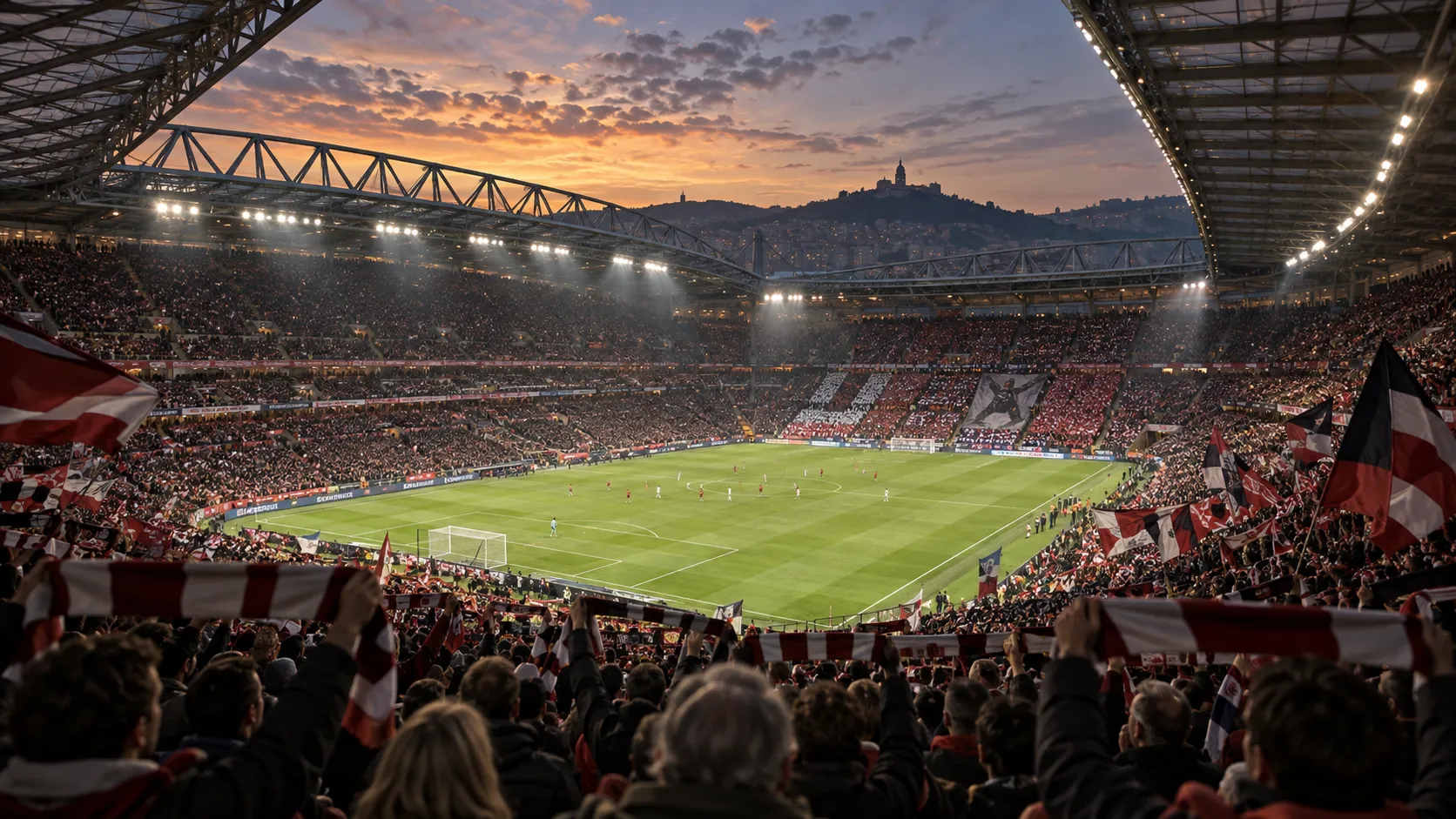
A football stadium can be described in practical terms as a place containing a pitch, stands, entrances, exits, dressing rooms, and thousands of seats. That description is accurate, but it explains almost nothing about why supporters can become emotionally attached to concrete, steel, turnstiles, stairways, and patches of grass. For the people who return week after week, a stadium gradually becomes connected to family, friendships, victories, disappointments, routines, and memories that accumulate over years. The building stops functioning only as a venue and begins to feel like part of the identity of the club itself.
This is why football supporters sometimes speak about stadiums with language normally reserved for places of unusual significance. A familiar ground can feel like a home even when a supporter has never lived anywhere near it. Its floodlights can be recognized from surrounding streets, the sound of the crowd can carry beyond its walls, and particular gates or stands can immediately recall people who once stood there. Football culture does not live exclusively inside stadiums, but few places concentrate its rituals, symbols, sounds, and shared memories as powerfully as the ground where supporters gather to watch their team.
A Football Ground Becomes Meaningful Through Repetition
No stadium becomes culturally important simply because architects complete its construction. Meaning develops through repeated use. Supporters take the same journey, meet familiar people, approach through recognizable streets, enter through particular turnstiles, and watch generations of players appear on the same patch of grass. What initially looks like an ordinary structure slowly becomes filled with personal history. A staircase may remind someone of attending matches with a parent, a section of seating may be associated with lifelong friends, and one view of the pitch may remain connected to a goal remembered decades later.
This accumulation of experience explains why the emotional value of a stadium cannot be measured by age, capacity, or architectural beauty alone. An old ground can be uncomfortable and still be loved, while a technically superior new stadium may initially feel unfamiliar. Supporters do not become attached only to facilities; they become attached to the life that took place inside them. The stadium becomes a container for football memory, and every new match adds another layer to a history that belongs collectively to thousands of people.
The Stadium Connects a Club to a Physical Place
Football clubs may now reach supporters across continents, but most were formed within particular communities. Their grounds provided a physical center around which that relationship could develop. Stadiums were often built close to homes, factories, railway lines, pubs, shops, schools, and streets used every day by the people who supported the club. On matchday, an ordinary neighborhood could therefore change character as thousands of supporters moved toward the same destination.
The connection between club and place becomes especially powerful when generations follow the same route to the same ground. A stadium helps make an otherwise abstract institution visible. The club may consist of changing owners, players, managers, employees, and supporters, but the ground provides continuity. That relationship is explored further in Football and Local Identity: Why Clubs Represent Their Communities. Even in modern football, where global audiences are enormous, the stadium continues to remind supporters that every club has a geographical story.
The Journey to the Ground Is Part of the Stadium Experience
The cultural meaning of a stadium begins before supporters enter it. Matchday often has a recognizable geography: a railway station, parking area, bridge, street, food stall, pub, or meeting point becomes part of the journey. Supporters arriving from different directions gradually join a larger flow of people wearing the same colors. The closer they get to the ground, the more clearly ordinary urban space begins to feel like football space. Scarves appear, conversations become focused on the match, vendors gather, police and stewards become visible, and the structure of the stadium starts to dominate the surroundings.
Those repeated journeys create memories that can survive long after individual matches are forgotten. A supporter may struggle to remember the score of an ordinary fixture from twenty years ago but still remember where they met friends before kick-off, what street they walked down, and when the stadium first came into view. This is one reason moving grounds can be emotionally difficult. A new stadium does not simply replace stands and seats; it changes the geography of matchday and forces supporters to construct new routines around a different place.
Traditional Stadiums Often Grew Rather Than Being Designed All at Once
Many historic football grounds were not created according to one complete architectural plan. Clubs developed stands as money, land, regulations, and demand allowed. One side might be rebuilt while another remained largely unchanged, roofs could be added decades apart, and terraces expanded or disappeared at different times. The resulting stadium could look irregular, with four sides that seemed to belong to different architectural periods. What might appear inefficient from a modern design perspective often gave older grounds unusually strong visual character.
That piecemeal development also allowed supporters to associate particular stands with different functions and identities. One end might become known for the loudest home support, another for visiting supporters, while a main stand carried executive areas and club offices. The physical arrangement influenced how sound traveled, where groups gathered, and how close people felt to the pitch. SwiftPeakX examines these effects in How Stadium Architecture Shapes the Matchday Experience. Architecture does not create supporter culture by itself, but it can strongly influence how that culture is expressed.
Terraces Created a Distinctive Kind of Collective Experience
For much of football history, standing terraces were central to the experience of watching the game. Supporters could gather densely, move within sections, find friends, and participate in a crowd whose physical closeness helped songs and reactions spread rapidly. Large terraces became associated with particular supporter groups and could develop reputations across football. The sight of thousands standing behind a goal became one of the defining images of the twentieth-century game.
The atmosphere created on terraces is remembered fondly by many supporters, but nostalgia should not hide the serious safety problems that existed at some grounds. Stadium development and crowd management were often inconsistent, while ageing infrastructure could struggle to accommodate enormous attendances. The movement toward safer accommodation became especially urgent following major stadium disasters and the reforms associated with the late twentieth century. The full transformation is explored in From Terraces to All-Seater Stadiums: The Evolution of Football Grounds.
Safety Changed Football Grounds Permanently
Modern stadium culture cannot be understood without acknowledging the tragedies that forced football to reconsider how supporters were accommodated and protected. Disasters at grounds in Britain exposed failures involving infrastructure, exits, crowd control, fire safety, barriers, and policing. Hillsborough in 1989 became the most consequential event in the transformation of English stadium policy. The disaster led to the Taylor Inquiry and accelerated the move toward all-seater accommodation in the leading divisions.
These reforms changed the physical appearance of football grounds across the country. Large terraces disappeared from many top-level stadiums, ageing stands were demolished, capacities changed, and clubs invested heavily in rebuilding. The transformation improved safety and sightlines but also changed the social organization of the crowd. Supporters who had once chosen where to stand increasingly occupied allocated seats, and long-established terrace groups were reorganized by the new layouts. Stadium modernization therefore produced cultural consequences alongside its essential safety improvements.
Seating Changed the Way Supporters Occupied Space
A standing terrace gives supporters considerable freedom to organize themselves within a section, while assigned seating creates a more fixed relationship between spectator and place. That difference can affect how groups form, how songs begin, and how easily highly vocal supporters gather together. Critics of the all-seater era sometimes argued that the new stadium environment was becoming quieter or more controlled, while others emphasized the substantial improvements in comfort, visibility, accessibility, and safety.
The debate demonstrates that stadium atmosphere is partly connected to the way bodies are arranged within space. A crowd is not simply a number printed on an attendance sheet. Whether supporters are standing, sitting, tightly grouped, separated by aisles, close to the pitch, or positioned far away can affect how collective behavior develops. Modern licensed standing areas represent one attempt to combine the social energy associated with standing and the safety standards required in contemporary grounds.
Floodlights Gave Stadiums a Different Identity After Dark
Few visual transformations are as dramatic as the change from an afternoon ground to a stadium illuminated at night. Floodlights make the pitch appear almost theatrical, concentrating attention on a bright rectangle surrounded by darker stands and sky. Supporters approaching from a distance can often see the glow before the stadium itself becomes visible. That sight has become deeply associated with midweek football, cup ties, European competition, and matches that feel different from routine weekend afternoons.
The technological history behind this atmosphere is explored in How Floodlights Transformed Football and the Matchday Experience. What began as a practical solution to limited daylight eventually changed scheduling and stadium culture. The floodlit ground became one of football’s most recognizable visual images. For many supporters, a major night match begins emotionally before kick-off simply because the familiar stadium looks different under artificial light.
The Sound of a Stadium Is Part of Its Architecture
Supporters often talk about stadium atmosphere as though it comes exclusively from the crowd, but the building determines how that crowd is heard. A low roof can trap and reflect noise differently from an open stand, while the distance between spectators and pitch affects how immediate reactions feel. Steep stands can concentrate large numbers of people into a relatively small visual area, whereas a running track or large gap around the field may create greater separation between players and supporters.
This means the same number of people can sound dramatically different in two stadiums. Architecture can amplify singing, distribute sound unevenly, or create sections where chants struggle to travel. Supporters learn these acoustic characteristics through experience and sometimes organize themselves accordingly. A famous atmosphere is therefore usually the result of interaction between people and place. The crowd produces the sound, but the stadium gives that sound its physical shape.
Songs Turn Thousands of Individuals Into One Crowd
A stadium becomes culturally powerful when thousands of separate spectators begin behaving collectively. Singing is one of the clearest examples. A chant can begin with a small group and travel across an entire stand until voices merge into one recognizable sound. For a few moments, people with different jobs, ages, backgrounds, and personal lives participate in the same action. The experience helps explain why football crowds can produce an unusually intense sense of belonging.
Some songs become strongly associated with particular stadiums because they are repeated there for decades. Supporters learn them not through official instruction but by attending matches and hearing older generations sing. The ground becomes a place where cultural knowledge is transmitted informally. A young supporter entering for the first time hears traditions that existed before they were born and gradually learns when and how to participate. Stadium culture therefore reproduces itself through repetition rather than written rules.
Rivalries Give Stadium Space Additional Meaning
The atmosphere of a ground can change dramatically depending on the opponent. A familiar stadium that feels relaxed for an ordinary fixture may become tense hours before kick-off when a major rival arrives. Police arrangements, ticket allocation, songs, banners, flags, and supporter movement can all change. The away section becomes particularly visible because the visiting colors represent a competing identity inside a space normally dominated by the home club.
These matches demonstrate how stadiums can become symbolic territory. Winning matters not only because of league points but because supporters experience the match inside a place strongly associated with their own identity. Losing to a rival there can feel like an intrusion, while an away victory can become an especially powerful memory for travelling supporters. That emotional dimension is explored in Why Football Rivalries Mean More Than the Result: Identity, History, and Belonging. The stadium gives rivalry a physical stage on which competing communities can see and hear one another.
Away Supporters Experience the Same Stadium Differently
A home supporter and an away supporter can enter the same building but experience two very different places. The home fan may know every approach road, turnstile, food stall, staircase, and view, while the visitor arrives into a restricted section of unfamiliar territory. Away fans are often concentrated together, which can create a particularly strong sense of collective identity even when they are heavily outnumbered by the home crowd.
The journey itself becomes part of that experience. Travelling supporters may spend hours on trains, buses, cars, or coaches for a match lasting less than two hours. The stadium becomes the destination around which an entire day is organized. Over time, supporters build personal maps of football through the grounds they have visited: famous stadiums, difficult journeys, unusual away sections, memorable victories, and places they hope never to visit again. Football geography becomes inseparable from supporter memory.
Food, Pubs, and Streets Extend the Stadium Beyond Its Walls
The culture associated with a football ground rarely stops at the turnstiles. Surrounding businesses adapt to matchday crowds, and some become as familiar to supporters as sections of the stadium itself. Pubs provide meeting places, food vendors establish traditions of their own, and nearby streets fill with people hours before kick-off. The economic and social ecosystem around a ground can develop over generations, meaning the stadium influences a much larger area than the land occupied by its stands.
This is particularly obvious when a club relocates. A new ground may provide better facilities, but traditional businesses near the old stadium can lose the crowds around which their matchday trade developed. Supporters also have to establish new meeting points and routines. The football pub as a social institution is explored in The Football Pub: How Matchday Drinking Places Became Social Institutions. The wider lesson is that football culture surrounds the stadium rather than existing only inside it.
National Stadiums Carry a Different Kind of Memory
Club grounds are built around recurring local identity, while national stadiums accumulate meaning through major occasions shared by supporters from many clubs. Wembley provides a clear English example. The original stadium opened in 1923 and became associated with FA Cup finals, international matches, the 1966 World Cup Final, and numerous events extending beyond football. Repeated national occasions allowed the ground to acquire meaning far greater than the physical structure itself.
When such stadiums are rebuilt, their symbolic identity can survive even if almost none of the original construction remains. The modern Wembley that opened in 2007 is architecturally different from the stadium known for its twin towers, yet the name and location still carry decades of inherited meaning. This demonstrates that stadium identity exists partly in architecture and partly in collective memory. Buildings can disappear while the cultural idea attached to the site continues.
Moving Stadium Can Feel Like Breaking With the Past
Clubs sometimes leave historic grounds because expansion is impossible, facilities are outdated, redevelopment is too expensive, or a new stadium offers greater commercial opportunity. From an operational perspective, relocation can make obvious sense. A purpose-built modern ground may offer more seats, better accessibility, stronger hospitality revenue, larger concourses, improved media facilities, and infrastructure capable of supporting events throughout the year.
Supporters, however, may experience the decision differently. The old ground contains memories that cannot physically be transported. A new stadium may copy colors, display historic photographs, name stands after club figures, or move statues and memorials, but the emotional relationship still has to develop through use. This is why new grounds can initially be described as lacking atmosphere even when their facilities are objectively superior. Cultural attachment cannot be installed during construction; it has to accumulate match by match.
Modern Stadiums Reflect Football’s Commercial Transformation
The contemporary stadium is expected to perform many more functions than its predecessors. Hospitality boxes, premium seating, restaurants, club shops, museums, conference facilities, media areas, digital advertising, and entertainment spaces can occupy substantial parts of the building. Clubs increasingly want grounds capable of producing revenue outside normal matchday hours. This commercial logic has changed stadium architecture and the type of experience available to different categories of spectator.
Critics sometimes fear that this process can make the stadium feel more like a generic entertainment venue and less like a football ground. The strongest modern designs attempt to avoid that problem by preserving closeness, noise, recognizable club imagery, and connections to local history while providing contemporary facilities. The challenge is not simply to construct a comfortable building. It is to create a modern environment capable of developing the distinctive character supporters expect from a football home.
Stadium Naming Shows the Conflict Between Commerce and Memory
The name of a ground can become as emotionally significant as its architecture. Supporters repeat stadium names through conversations, songs, directions, tickets, journalism, and memories until the words feel inseparable from the club. Commercial naming rights can therefore produce complicated reactions. A sponsor may view a stadium name as valuable exposure, while supporters may continue using the traditional name because it carries cultural meaning a commercial agreement cannot easily replace.
This difference illustrates a broader tension in modern football. Commercial structures can legally rename a building, but supporter culture does not necessarily follow contractual language. Football memory is often stubborn. Fans preserve old stand names, entrances, nicknames, and landmarks long after official terminology changes. A stadium belongs financially to an organization, but its cultural vocabulary is partly controlled by the people who repeatedly use it.
Memorials Make Stadiums Places of Remembrance
Football grounds also become locations where communities remember supporters, players, managers, and significant events. Flowers placed outside gates, plaques, statues, minute silences, memorial gardens, and permanently occupied symbolic seats can give parts of a stadium meaning unrelated to the immediate match. After the death of an important figure, supporters often instinctively travel to the ground even when no fixture is taking place, treating it as the natural place to express collective grief.
This behavior reveals how deeply stadiums can become embedded in communal identity. People gather there because the ground is understood as a shared home of the football community. A stadium may host joy one week and mourning the next, yet both experiences strengthen the idea that the place represents something larger than commercial entertainment. Its cultural importance comes from being available as a physical location where emotions can be experienced together.
Stadium Museums Preserve What Redevelopment Removes
As grounds change, clubs and museums increasingly preserve physical evidence of earlier eras. Old seats, turnstiles, signs, shirts, photographs, barriers, programmes, and architectural fragments can become historical objects once their practical use ends. Something that seemed completely ordinary while attached to an old stand can gain emotional importance after the stand itself disappears. Preservation allows supporters to see how stadium life looked and felt before modern redevelopment.
This process reflects a wider recognition that football history is not limited to trophies and famous players. The places where supporters experienced the game matter as well. A turnstile tells a story about entering the ground, a wooden seat represents how spectators were accommodated, and an old photograph reveals how a stadium interacted with its neighborhood. Football heritage therefore includes the ordinary physical structures through which millions of supporters encountered the sport.
Licensed Standing Shows That Stadium Design Keeps Evolving
The move toward all-seater grounds once appeared to establish a clear direction for elite football stadiums, but the return of licensed standing demonstrates that the evolution continues. Modern standing sections use engineered barriers and controlled configurations rather than simply recreating unrestricted traditional terraces. Their development reflects sustained supporter demand for standing combined with the requirement that contemporary safety standards remain central.
This is an important example of how football can preserve aspects of older culture without pretending the past was perfect. Supporters can value the social energy of standing while recognizing why previous stadium arrangements needed reform. The challenge is to separate the cultural qualities people miss from the unsafe conditions that should not return. Modern stadium design is therefore increasingly about adaptation rather than choosing between nostalgia and progress.
The Stadium Still Matters in an Age of Global Broadcasting
Football can now be watched almost anywhere. Supporters stream matches on phones, follow clubs through social media, join international fan communities, and experience competitions without ever entering the stadium where the game takes place. It might seem that this global digital culture would reduce the importance of physical football grounds. In reality, broadcasting often strengthens their symbolic value because the stadium provides the visual and emotional setting through which distant audiences experience the club.
A recognizable stand, tunnel, crowd display, floodlit roof, or end behind the goal can become familiar to supporters thousands of miles away. When overseas fans eventually visit, arriving at the stadium may feel like reaching a place they have known through screens for years. Digital football therefore does not necessarily replace the ground. It can extend the stadium’s cultural presence far beyond the city where it physically stands.
Why Football Stadiums Feel Sacred to Supporters
Calling a football stadium “sacred” is not a claim that it is literally a religious site. The word captures the seriousness with which supporters can treat certain places because of the memories, relationships, rituals, and identities attached to them. People return at regular times, wear shared colors, sing inherited songs, occupy familiar positions, remember people who have died, celebrate defining moments, and teach younger generations how to participate. The stadium gives all of those practices a physical home.
This is why supporters can feel grief when an old ground disappears even if the replacement is safer, larger, and more comfortable. The loss is not only architectural. A place containing thousands of personal memories has become inaccessible, and photographs cannot fully reproduce the experience of standing inside it. The new stadium may eventually acquire similar significance, but only after supporters fill it with their own stories. Football grounds become culturally important through human experience rather than construction alone.
The Real Stadium Is Made of People as Much as Concrete
Football architecture matters, but an empty stadium reveals the limits of architecture on its own. Seats, roofs, floodlights, screens, and concourses provide the framework, yet the atmosphere supporters value emerges when people occupy that framework together. Songs need voices, rivalries need opposing communities, traditions need repetition, and memories need experiences. The stadium becomes culturally alive because supporters continually transform a building into a football place.
That relationship explains why the best football grounds are remembered not simply for how they look but for how they feel. Supporters describe noise, tension, anticipation, belonging, fear, celebration, and the moment the pitch first appears through an entrance to the stand. Those experiences cannot be reduced to stadium capacity or construction cost. A football ground becomes meaningful when architecture, club identity, local history, and human memory meet in the same place. That is where football culture truly lives.


