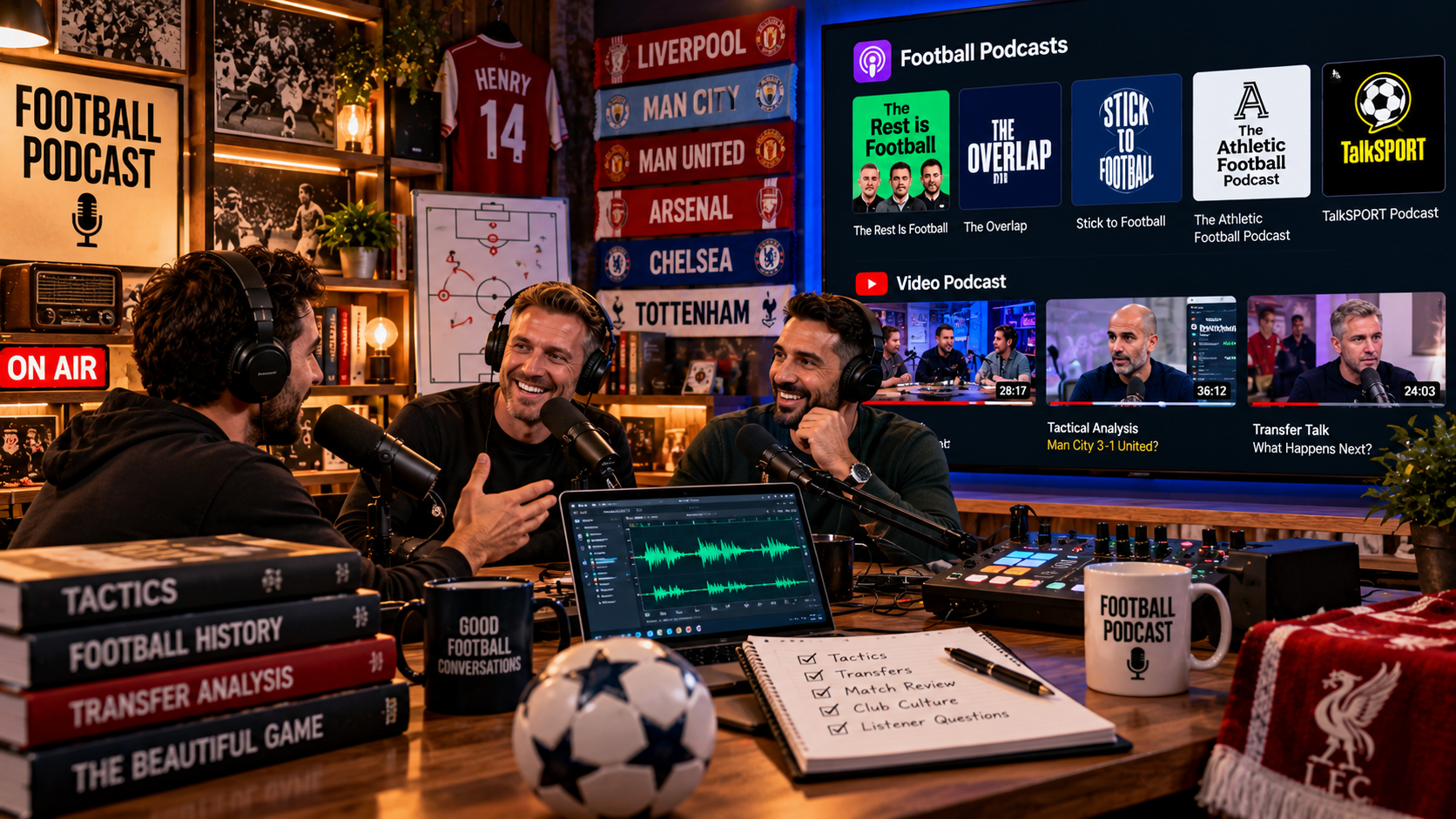
Football podcasts created a new space for tactical debate, storytelling, humor, and supporter voices. Discover why on-demand audio became one of the most influential formats in modern football media.
For football podcasts, the clearest way to understand this subject is to compare the first and last entries in its timeline. Radio tradition records that football already had a strong audio culture through live commentary and phone-ins; Video-podcast era records that many shows now publish clips or full episodes on video platforms.
Written by: SwiftPeakX Editorial Team
Last editorial review: October 2026
Editorial note: This article was reviewed for topic-specific wording, historical clarity, source transparency and natural readability. References are listed at the end for verification and further reading.
Key Takeaways
Podcasts gave football discussion more time and flexibility than traditional radio slots or newspaper columns.
The format lowered production barriers, allowing club-specific and independent supporter voices to find audiences.
Podcasting supports niches—from tactics and history to women’s football, lower leagues and supporter politics—that mass media may cover less often.
The strongest shows build trust through recurring hosts, consistent perspective and a recognizable community rather than breaking news alone.
Historical Foundations
Football audio existed long before podcasting through radio commentary and phone-in shows. Podcasts changed the format by removing the fixed broadcast schedule. Supporters could download or stream discussions whenever they wanted, creating space for long-form analysis, niche club shows, tactical programs, historical series, and supporter-led conversation.
Low barriers to entry mattered. A small group of knowledgeable fans could build an audience without owning a radio frequency or newspaper column. Some podcasts remained amateur and intimate; others became professional media businesses with advertising, subscriptions, live shows, and video versions.
The medium also changed tone. Podcasts often feel conversational, allowing hosts to explore uncertainty or humor in ways that formal match reports may not. Listeners develop recurring relationships with voices they hear every week.
Football produces endless debate but not every debate needs pictures. Tactics can be described, transfers discussed, memories retold, and emotions unpacked while listeners commute, exercise, or work. That portability gives podcasts unusual intimacy. At their best, they create a virtual pub table where expertise and personality matter as much as production scale. The format helped diversify who gets to speak publicly about football.
Why football suits long-form audio
A match ends in ninety minutes, but interpretation can continue for days because tactics, selection, transfers and identity all invite argument. Podcasting gives those conversations room to breathe without fitting a fixed broadcast schedule.
Listeners can follow nuanced disagreement rather than only headline conclusions. That depth is especially useful for topics that need context instead of instant reaction.
Low production barriers changed who could speak
Traditional sports broadcasting required access to airtime and institutions, while a podcast can begin with modest equipment and a clear idea. That opened space for supporters, analysts and local experts outside major media organizations.
Quality still matters—audio, research and editing affect trust—but distribution is far more accessible. The result is a broader range of football voices than a single national schedule could support.
Club-specific podcasts build micro-publics
A national audience may not care about a reserve left-back, ticketing policy or local ownership debate, but a club podcast can discuss those subjects in detail. Repeated listening creates familiarity with hosts and guests. That makes club-specific podcasts build micro-publics a genuine turning point in the wider story of The Rise of Football Podcasts rather than a minor historical detail.
That relationship can make a show feel like a supporters’ room rather than a generic media product. The community is strengthened by recognition and continuity as much as by information.
Podcasting rewards expertise and personality together
A purely technical show can feel dry, while pure banter can become repetitive; successful football podcasts often combine knowledge with a strong conversational voice. Listeners return because they understand how the hosts think, not because every opinion is correct.
This makes trust cumulative. A good show develops an editorial identity that helps listeners predict what kind of value an episode will provide.
The format is converging with video
Many football podcasts now record cameras, publish short clips and stream live reactions, which expands discovery beyond audio apps. That can increase reach but also change incentives toward visually striking arguments and short segments.
The original strength of podcasting—time for depth—can be lost if every discussion is designed for a clip. The best hybrid formats use video for distribution without letting it dictate the entire conversation.
Timeline: Key Turning Points
Period Development Why It Mattered
Radio tradition Football already had a strong audio culture through live commentary and phone-ins. Fans were comfortable listening to the game as conversation.
Podcast emergence Downloadable audio allowed listeners to choose time and topic. Football talk became on-demand.
Smartphone era Apps simplified discovery, subscription and commuting-time listening. Podcasts became routine media rather than a technical hobby.
Independent boom Supporter-run and specialist shows grew alongside broadcaster podcasts. Niche expertise gained distribution.
Video-podcast era Many shows now publish clips or full episodes on video platforms. The line between podcast, studio show and social content has blurred.
Why This Still Matters
Podcasts gave football discussion a form that is intimate, portable and relatively inexpensive to produce. A show can serve a global audience or a tiny club community, and it can spend an hour on a subject that television may give only a few minutes. That depth is part of the appeal, but it also places more responsibility on hosts to distinguish reporting, analysis and speculation. The medium expanded who gets to speak about football while making credibility something listeners often judge over time rather than through a traditional broadcaster’s brand.
The podcast format also changed the economics of football commentary. A small production can reach listeners directly without owning broadcast rights, because discussion can revolve around analysis, interviews and reaction rather than live match footage. That lowers the barrier to entry and allows niche expertise to find an audience. At the same time, sustainable shows still need time, research, editing and trust, so the apparent simplicity of a microphone can hide the work required to build a credible long-running programme.
Long-form audio also created room for voices that traditional football media often overlooked. Supporter groups, analysts, historians and reporters covering smaller clubs can build loyal audiences without competing for a fixed television schedule. The result is a more fragmented media landscape in which authority comes from expertise and consistency as much as from institutional access. That diversity is one reason football podcasting has remained resilient even as platforms and business models change.
Common Misconceptions
Podcasts are just radio uploaded later.
Some are produced by broadcasters, but podcasting allows different lengths, niches, release schedules and audience relationships.
A football podcast needs famous guests to succeed.
Consistent expertise, chemistry and a clear niche can build loyalty without celebrity access.
Video makes audio podcasts obsolete.
Many listeners value audio precisely because it fits commuting, exercise and other activities where watching a screen is inconvenient.
Related SwiftPeakX Reading
From Message Boards to Matchday Threads: How Online Communities Changed Football Fandom
From Console Classics to Online Play: How Football Video Games Shaped Fan Culture
Frequently Asked Questions
Why are club-specific podcasts so popular?
They can cover detail that national media rarely has time to address and speak directly to a defined supporter community.
What makes a football podcast credible?
Transparent sourcing, knowledgeable hosts, corrections when needed and a clear distinction between reporting and opinion all help.
Why do so many podcasts publish clips?
Short video and audio clips improve discovery on social platforms and can direct new listeners to full episodes.
Are podcasts replacing written football journalism?
They complement it. Many shows depend on reporting and research that also appears in written form, while offering a different conversational experience.
Podcasts Made Football Conversation Portable
First comes Radio tradition. Football already had a strong audio culture through live commentary and phone-ins. Fans were comfortable listening to the game as conversation.
Then comes Podcast emergence. Downloadable audio allowed listeners to choose time and topic. Football talk became on-demand.
Another important entry is Smartphone era. Apps simplified discovery, subscription and commuting-time listening. Podcasts became routine media rather than a technical hobby.
The next major step appears under Independent boom. Supporter-run and specialist shows grew alongside broadcaster podcasts. Niche expertise gained distribution.
The final entry is Video-podcast era. Many shows now publish clips or full episodes on video platforms. The line between podcast, studio show and social content has blurred.
The Bottom Line
The history of The Rise of Football Podcasts is not a straight line toward a perfect modern version. The Radio tradition stage reflects one set of needs, while Video-podcast era reflects another. For football podcasts, seeing both stages together makes current debates more precise because it separates the underlying purpose from the particular method used in any one era.
Sources & Further Reading
Reuters Institute — Digital news and audio research
BBC Sounds — Football podcasts and programmes
FIFA Museum — Football media and culture