Fan zones transformed public viewing into a major part of tournament culture. Discover how giant screens, organized gathering spaces, and collective celebration created a matchday experience beyond the stadium.
This is a story of accumulated adjustments rather than one decisive invention. The 2002 World Cup stage saw large public gatherings in Korea and Japan demonstrated demand for shared viewing outside stadiums; the 2026 stage saw host cities planned an expanded network of festival sites and fan events.
Written by: SwiftPeakX Editorial Team
Last editorial review: October 2026
Editorial note: This article was reviewed for topic-specific wording, historical clarity, source transparency and natural readability. References are listed at the end for verification and further reading.
Key Takeaways
Large public viewing gatherings existed before official fan-zone branding, but major tournaments professionalized the model.
FIFA’s official Fan Fest programme was introduced at the 2006 World Cup after public-viewing enthusiasm in 2002.
Fan zones combine live screening with music, food, sponsor activity and city programming.
They expand access beyond stadium ticket holders while creating new challenges in security, transport and commercialization.
Historical Foundations
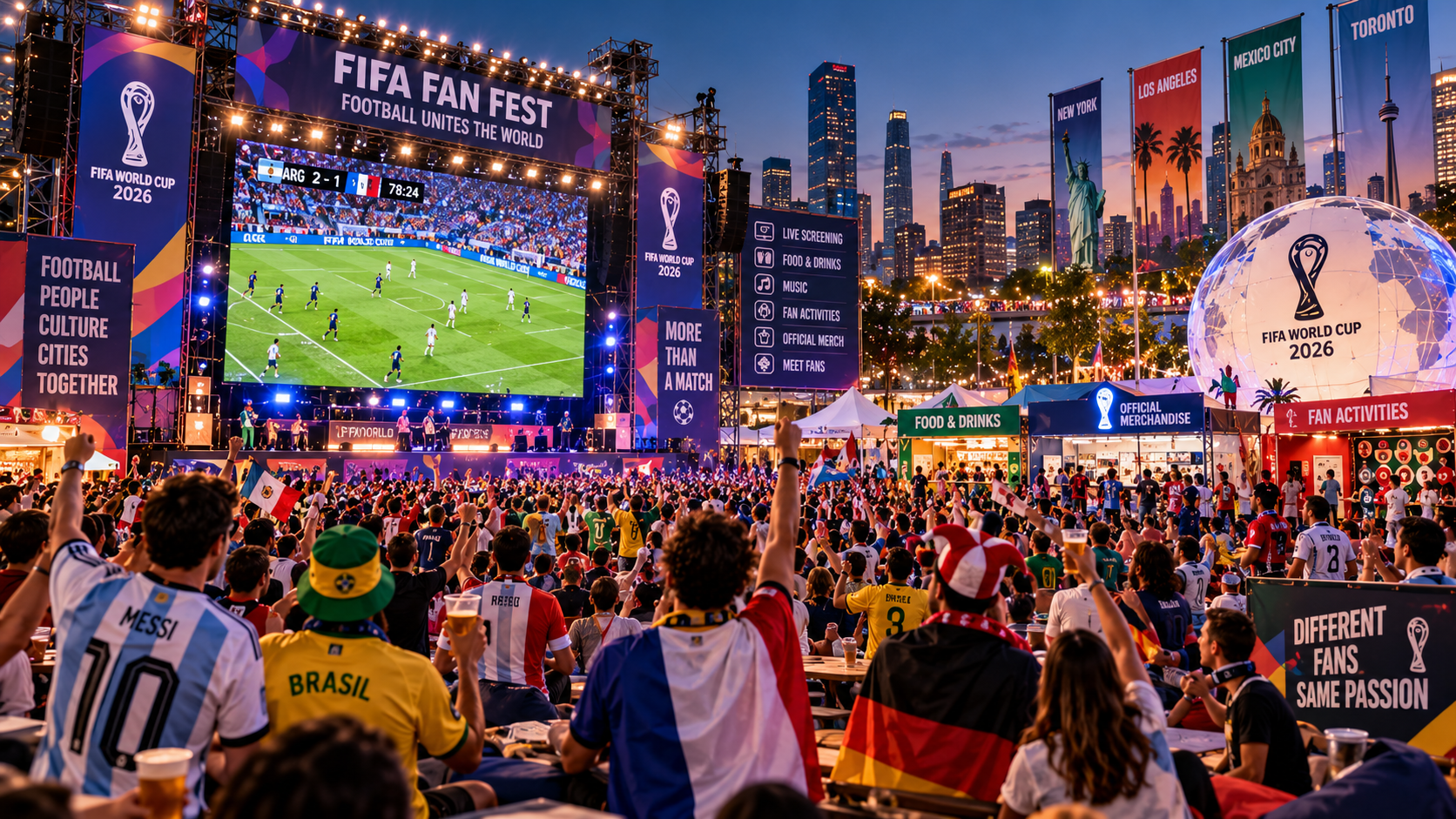
Large tournaments have always drawn crowds beyond the stadium, but organized fan zones turned public viewing into a planned part of the event. Giant screens, controlled entry, food, entertainment, sponsor activations, and security create a temporary stadium-like environment for people without match tickets.
Fan zones became especially visible around World Cups and continental tournaments as host cities sought ways to include larger numbers of visitors. They can reduce pressure on stadium surroundings, create designated gathering places, and give broadcasters vivid images of collective celebration.
The experience differs from both the stadium and the living room. Supporters watch a screen, yet they react inside a crowd large enough to produce chants, tension, and shared emotion. The result is a hybrid form of spectatorship.
Emotion in football is contagious. A gasp spreads through a square, a goal triggers strangers to embrace, and songs emerge without formal coordination. Public viewing turns broadcast consumption into a collective ritual. At the same time, fan zones are carefully managed environments involving policing, licensing, commercial partners, and crowd-control planning. Their popularity reflects both football’s social power and the modern event industry built around major tournaments.
Why fan zones matter when stadiums are full
A major tournament attracts far more visitors than can hold match tickets, creating demand
The appeal is collective reaction rather than merely access to a broadcast. Supporters gain a place to sing, celebrate and meet even when they never enter the actual venue.
Public viewing became event infrastructure
Once organizers formalized fan zones, they had to plan crowd capacity, transport, emergency routes, toilets, food and security. The viewing area became a temporary event venue rather than an improvised screen.
That professionalization improves safety and reliability but increases cost and regulation. Cities now treat fan festivals as part of host planning alongside stadium operations.
The experience is broader than the match
Music, local culture, sponsor activations and food extend the event across hours rather than only ninety minutes. That can attract families and casual visitors who would not attend a supporters’ bar.
The trade-off is commercialization: official zones can feel more controlled than spontaneous street gatherings. The best events create enough structure for safety while leaving room for supporters to generate their own atmosphere.
Fan zones reshape urban space
A central square used for commuting or tourism can become a temporary football district during a tournament. That concentrates visitors and can benefit nearby businesses while also creating noise and congestion.
City authorities must balance economic activity with resident needs. Football therefore becomes part of urban planning, not just stadium management.
Why the format keeps growing
Fan zones offer sponsors and organizers a measurable audience while giving supporters a lower-cost way to participate in tournament culture. They also provide a controlled setting for people who want atmosphere without navigating informal street crowds.
Their success demonstrates that mega-events are experienced through cities as much as through venues. The stadium remains the sporting centre, but the public screen creates a second collective arena.
Timeline: Key Turning Points
Period Development Why It Mattered
2002 World Cup Large public gatherings in Korea and Japan demonstrated demand for shared viewing outside stadiums. Organizers saw that the tournament experience extended beyond ticket holders.
2006 Germany FIFA introduced an official Fan Fest programme. Public viewing became planned tournament infrastructure.
2010–2018 Fan festivals expanded across host cities and, in some editions, beyond the host country. The model became a global part of World Cup culture.
2022–23 Fan Festival branding broadened the entertainment and cultural concept. The format emphasized football plus music, food and lifestyle.
2026 Host cities planned an expanded network of festival sites and fan events. Public viewing remained central to the World Cup experience.
Why This Still Matters
Fan zones transformed public viewing into a planned part of tournament culture. Large screens, security, transport, food, entertainment and sponsor activity turn watching into an event even for people without stadium tickets. The model can broaden participation and ease pressure around venues, but it also raises questions about crowd management and commercialization in public space. Their popularity shows that major football events are no longer defined only by what happens inside the stadium; cities now design parallel experiences around the match.
For host cities, fan zones can also distribute crowds beyond the stadium precinct. That can support tourism and public celebration, but only when transport, accessibility and emergency planning are treated as core design questions. A successful viewing space is therefore as much an urban-management project as an entertainment product.
Common Misconceptions
Fan zones were invented because stadium tickets became digital.
Their rise is better linked to mass public viewing and tournament hosting, especially the World Cups of 2002 and 2006.
A fan zone is just a big television screen.
Official sites often require extensive event planning, security, transport, entertainment and commercial infrastructure.
Only ticketless tourists use fan zones.
Local residents, families and ticket holders on non-match days also use them as social tournament spaces.
Related SwiftPeakX Reading
Goal Celebrations: How Scoring Became a Language of Emotion and Identity
From Message Boards to Matchday Threads: How Online Communities Changed Football Fandom
Football Friendships: Why Supporters Sometimes Form Bonds Across Club Lines
Frequently Asked Questions
When did the official FIFA Fan Fest begin?
The official programme was introduced for the 2006 World Cup in Germany after the popularity of public viewing in 2002.
Are fan zones always free?
Policies vary by event and city; many major official World Cup fan festivals have been free-entry spaces, but local arrangements can differ.
Why do cities host them?
They spread the visitor experience beyond stadiums and create a managed location for large public gatherings.
How are fan zones different from sports bars?
They operate at much larger scale in public space and are often integrated into official tournament or city planning.
Fan Zones Turned Viewing Into an Event
The first entry, 2002 World Cup, establishes the baseline. Large public gatherings in Korea and Japan demonstrated demand for shared viewing outside stadiums. Organizers saw that the tournament experience extended beyond ticket holders.
A second stage appears under 2006 Germany. FIFA introduced an official Fan Fest programme. Public viewing became planned tournament infrastructure.
A further turning point appears at 2010–2018. Fan festivals expanded across host cities and, in some editions, beyond the host country. The model became a global part of World Cup culture.
Another shift is visible in 2022–23. Fan Festival branding broadened the entertainment and cultural concept. The format emphasized football plus music, food and lifestyle.
The chronology closes under 2026. Host cities planned an expanded network of festival sites and fan events. Public viewing remained central to the World Cup experience.
What Changed—and What Stayed Recognizable
Comparing 2002 World Cup with 2026 makes the scale of change in Fan Zones easier to judge. Early in the story, large public gatherings in Korea and Japan demonstrated demand for shared viewing outside stadiums. Organizers saw that the tournament experience extended beyond ticket holders. By the later stage, host cities planned an expanded network of festival sites and fan events. Public viewing remained central to the World Cup experience. For Fan Zones, that contrast matters because the modern practice inherited an older purpose even though the tools, expectations or institutions around it had changed.
One way to test that continuity is to revisit the misconception that fan zones were invented because stadium tickets became digital. Their rise is better linked to mass public viewing and tournament hosting, especially the World Cups of 2002 and 2006. For Fan Zones, correcting that misconception matters because it separates the enduring purpose from details that changed over time. For Fan Zones,
The Bottom Line
The enduring lesson is that Fan Zones has always been shaped by context. The 2002 World Cup entry answers one set of conditions; the 2026 entry answers another. For football fan zones history, future changes will face the same test: whether they improve the experience without losing the function people still value.
Sources & Further Reading
FIFA — Fan Festival history
FIFA — Fan Festival overview
FIFA — Fan Festival strategy