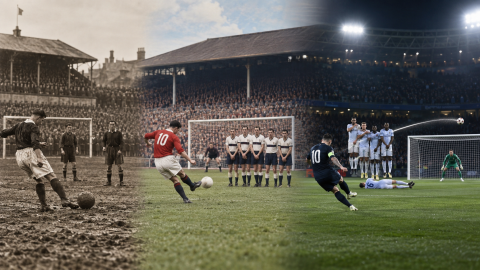
The Evolution of Football Pitches
Football pitches have evolved from uneven, muddy grounds into carefully engineered playing surfaces. Explore the rise of drainage systems, artificial turf, hybrid grass, and the science behind the modern pitch.
Football history is the story of how the modern game developed through changing rules, equipment, stadiums, competitions, technology, and traditions. This section explores the origins of football, major changes to the Laws of the Game, the evolution of stadiums and equipment, and the historical developments that shaped how football is played and experienced today.
Football pitches have evolved from uneven, muddy grounds into carefully engineered playing surfaces. Explore the rise of drainage systems, artificial turf, hybrid grass, and the science behind the modern pitch.
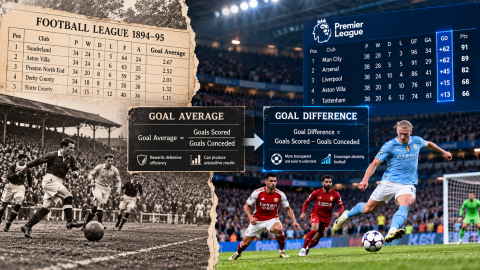
League tables once used goal average rather than goal difference to separate tied teams. Learn why football changed the formula, how the new method altered incentives, and why tie-break rules matter.
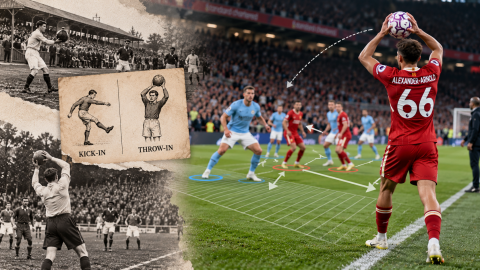
The throw-in looks simple, but its history reflects football’s long search for standardized restarts. Discover how competing early rules eventually produced the two-handed technique used around the world today.
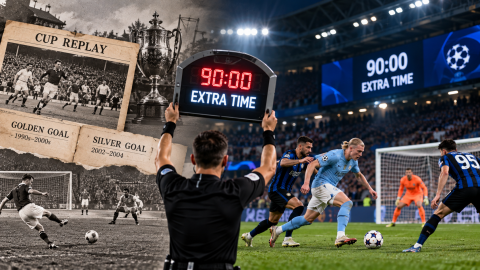
Why does football continue beyond 90 minutes in knockout matches? Trace the origins of extra time, the experiments with golden and silver goals, and the reasons the game still relies on this dramatic extension.
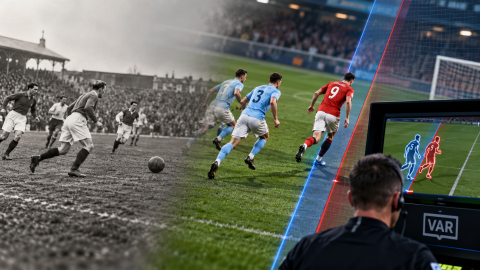
The offside rule has shaped football tactics for more than a century. Explore how its definition evolved from the game’s earliest laws to the VAR era—and why it remains one of football’s most debated rules.
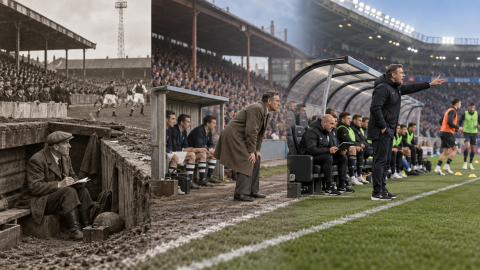
From Donald Colman’s pioneering dugout at Pittodrie to today’s data-filled technical areas, discover how football transformed the touchline into a regulated workplace for coaches, substitutes and staff.
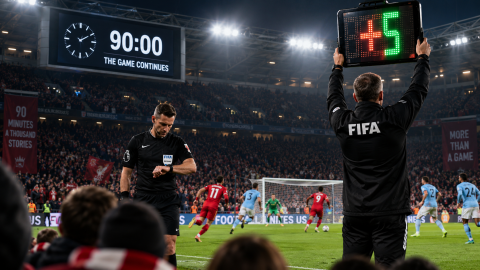
Why does a football match continue after 90:00? Explore how stoppage time evolved, why referees control added time, and why football still uses a running clock instead of stopping it for every interruption.
From a nineteenth-century punishment for infringements to curling shots, knuckleballs and rehearsed routines, discover how the free kick became one of football’s most specialised skills.
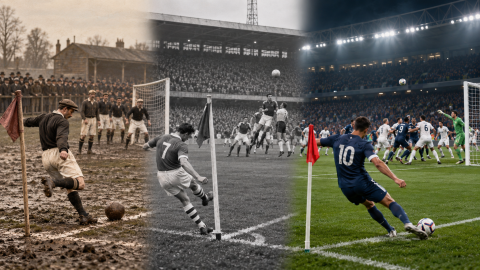
The corner kick began as a nineteenth-century solution to a simple goal-line problem before becoming one of football’s most carefully planned attacking weapons. Explore its Sheffield origins, adoption into the Laws, the birth of the Olympic goal, and the tactics that transformed corners into modern set pieces.
Promotion and relegation did not exist in their modern form when league football began. Discover how re-election votes, test matches, automatic movement, the football pyramid, and play-offs transformed league position into one of the most powerful forces in football culture.