
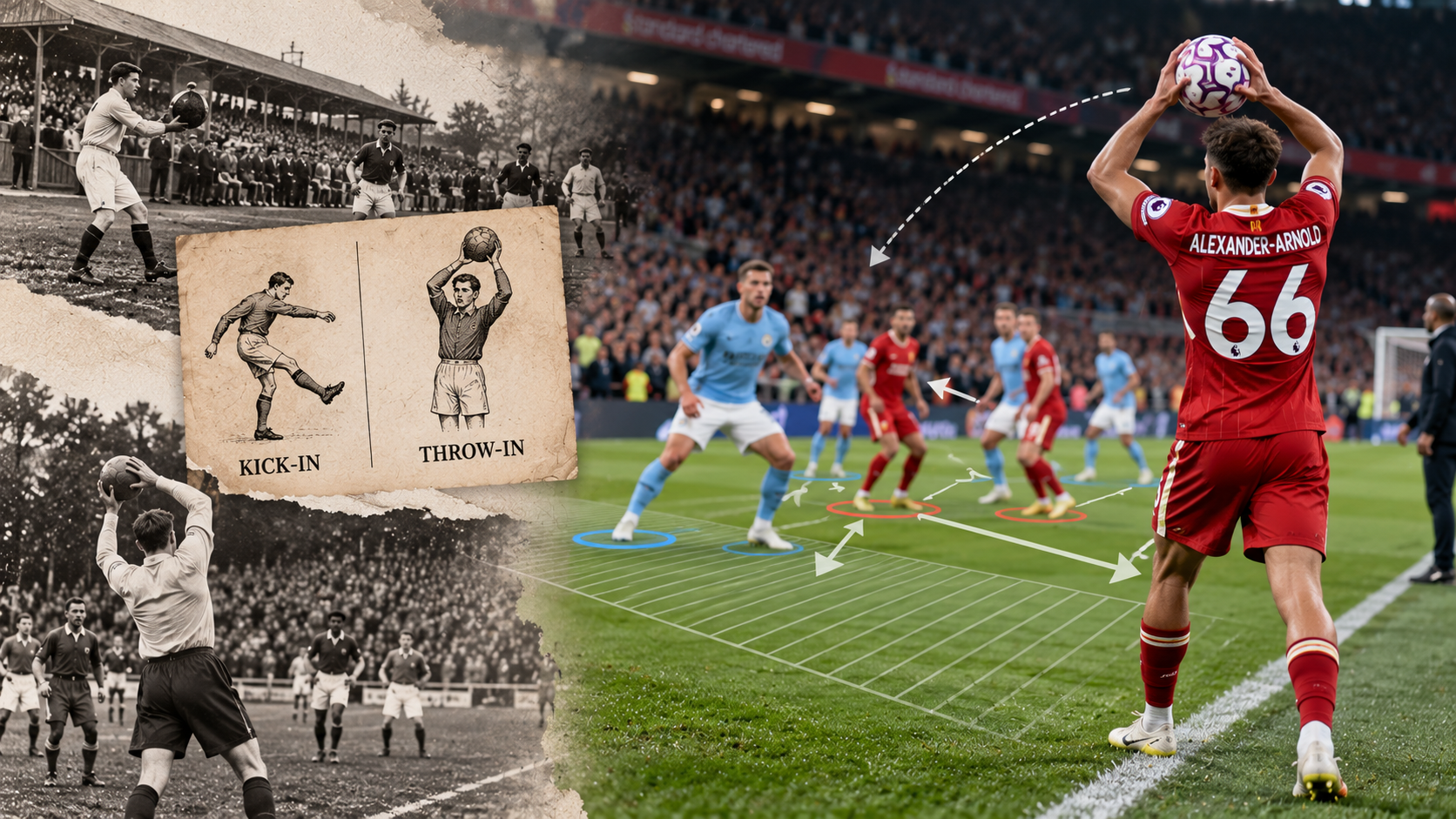
The throw-in looks simple, but its history reflects football’s long search for standardized restarts. Discover how competing early rules eventually produced the two-handed technique used around the world today.
Rather than treating the current version as inevitable, it helps to follow the sequence of choices behind it. The story begins with Nineteenth century, when different football codes used throws, kick-ins and other methods to restart from touch, and extends to Modern debate, when kick-ins periodically return as a proposed alternative in trials or discussion.
Written by: SwiftPeakX Editorial Team
Last editorial review: October 2026
Editorial note: This article was reviewed for topic-specific wording, historical clarity, source transparency and natural readability. References are listed at the end for verification and further reading.
Key Takeaways
Nineteenth-century football codes disagreed over how play should restart when the ball crossed the touchline.
The modern throw-in became one of association football’s most distinctive exceptions to the normal ban on handling by outfield players.
Detailed procedure rules make the restart recognizable and limit the advantage of throwing technique.
Modern teams now coach throw-ins as structured possession and pressing situations rather than dead time.
Historical Foundations
A ball leaving the side of the field seems like a small event, but nineteenth-century football codes handled it in strikingly different ways. Some rules allowed a kick-in, others a throw, and some linked possession to who reached or touched the ball first. When association football standardized its laws, the throw-in emerged as a distinctive restart that separated the game from codes that favored kicking the ball back into play.
The technique itself became increasingly precise. The ball must be delivered with both hands from behind and over the head, and the thrower must respect the touchline and proper foot position. These details are not decorative. They prevent the restart from turning into an unrestricted overhead launch and make the action easy to recognize and police. Over time, the throw-in also acquired tactical value as teams developed rehearsed movements, pressing traps, and specialist long throwers.
Modern coaching treats throw-ins as set plays rather than pauses. Teams analyze where teammates should stand, how to create a free player, when to throw down the line, and when to recycle possession. Long throws into the penalty area can function almost like corners, while possession-oriented sides use short combinations to escape pressure. A restart once treated as routine has become an area of specialized coaching.
The throw-in is one of football’s charming exceptions: outfield players normally cannot handle the ball, yet the laws deliberately require them to do so at the touchline. Historically, the rule emerged from competing football traditions and became part of association football’s identity. Tactically, the hands also make the restart distinct from a free kick and reduce the possibility of instantly shooting directly from the touchline. That combination of history and game design explains why the throw-in has survived repeated calls for alternatives such as kick-ins.
Why the restart is so unusual
Football normally restricts outfield players from using their hands, yet the throw-in deliberately requires handling. That oddity makes sense historically: the touchline restart evolved from competing codes rather than from a clean modern design process.
The law also prevents a throw from becoming an unrestricted attacking pass by specifying body position and technique. What looks arbitrary today is therefore partly a fossil from football’s formation as a distinct code.
Procedure creates fairness
Facing the field, using both hands, delivering from behind and over the head, and keeping part of both feet on or outside the line create a recognizable action. The rules reduce the ability to disguise or radically vary the restart and make illegal technique easier to identify.
Because a goal cannot be scored directly from a throw-in, the restart also remains different from a free kick. These limits preserve the throw-in as a way to return the ball to play rather than as a direct shooting opportunity.
The hidden tactical value
A throw-in creates a moment when one team controls the ball but every nearby passing lane can be marked aggressively. That makes it a miniature tactical puzzle involving movement, screening, third-player runs and the risk of being trapped near the line.
Possession-oriented teams often use short throws to escape pressure, while direct teams may target territory and second balls. The restart is therefore strategically richer than its reputation as a pause suggests.
Long throws and set-piece specialization
A player who can deliver the ball deep into the penalty area changes the geometry of an attacking throw. Defenders must prepare for aerial duels, flick-ons and rebounds in ways that resemble a corner or wide free kick. That makes long throws and set-piece specialization a genuine turning point in the wider story of The History of the Throw-In rather than a minor historical detail.
Specialist long throwers have periodically become major tactical assets even though the law itself has not changed. This is a good example of players discovering new value inside an old rule rather than waiting for lawmakers to create a new opportunity.
Why kick-in proposals keep returning
Supporters of kick-ins argue that using the feet could speed restarts or produce more natural passing patterns. Critics note that powerful kicks from the touchline could create frequent set-piece attacks and fundamentally alter field position.
Any change would also affect grassroots football, where simplicity and equipment-free officiating matter. The debate reveals a broader principle of law-making: a seemingly small restart can have consequences for tactics, pace and accessibility.
Timeline: Key Turning Points
Period Development Why It Mattered
Nineteenth century Different football codes used throws, kick-ins and other methods to restart from touch. The disagreement reflected the fact that “football” was not yet one standardized game.
Association rules The throw became established as the characteristic touchline restart. It helped distinguish association football from rival codes.
Codification Both hands, delivery from behind and over the head, and foot-position requirements became central procedural features. The restart could be enforced consistently across competitions.
Tactical era Coaches began treating throw-ins as rehearsed set pieces. Teams developed pressing traps, short combinations and specialist long throws.
Modern debate Kick-ins periodically return as a proposed alternative in trials or discussion. The persistence of the throw-in shows how strongly tradition and tactical familiarity shape law reform.
Why This Still Matters
The throw-in is a reminder that football does not always choose the most efficient-looking solution. A kick-in would be familiar from other forms of football, yet the two-handed throw has become part of association football’s identity and tactical vocabulary. Teams now use blocking movements, rotations, pressing traps and specialist long throws around a restart once treated as routine. That evolution matters because law changes would not affect only the method of putting the ball back into play; they would alter an entire set of habits that coaches and players have built around the touchline.
Common Misconceptions
A throw-in must be taken from exactly on the touchline.
The thrower may have part of each foot on the touchline or on the ground outside it, while delivering from the point where the ball left play.
You can score directly from a throw-in.
No. If the ball enters the opponents’ goal directly, the restart is a goal kick.
Offside applies normally to the receiver.
A player cannot be penalized for offside when receiving the ball directly from a throw-in.
Related SwiftPeakX Reading
The Offside Rule: How Football’s Most Debated Law Evolved
Why Football Has Extra Time: The History of Playing Beyond 90 Minutes
Frequently Asked Questions
Why does a throw-in use both hands?
The two-handed technique is part of the standardized procedure and limits how much variation or one-arm throwing power can shape the restart.
Can a player stand on the line while throwing?
Yes. Part of each foot may be on the touchline or on the ground outside it, provided the rest of the procedure is correct.
Why do teams sometimes spend so much time on throw-in coaching?
Because a throw-in is a repeatable possession situation with predictable spacing, making it suitable for rehearsed movements and pressing solutions.
Could football ever replace throw-ins with kick-ins?
Trials and proposals have appeared at different times, but changing the restart would alter tactics enough that lawmakers treat the idea cautiously.
Why Football Kept the Throw Rather Than the Kick-In
Nineteenth century is the earliest point shown here. Different football codes used throws, kick-ins and other methods to restart from touch. The disagreement reflected the fact that “football” was not yet one standardized game.
Association rules shows the first major shift. The throw became established as the characteristic touchline restart. It helped distinguish association football from rival codes.
Codification adds a new layer to the story. Both hands, delivery from behind and over the head, and foot-position requirements became central procedural features. The restart could be enforced consistently across competitions.
Tactical era marks a later phase in the transition. Coaches began treating throw-ins as rehearsed set pieces. Teams developed pressing traps, short combinations and specialist long throws.
Modern debate brings the timeline into its latest phase. Kick-ins periodically return as a proposed alternative in trials or discussion. The persistence of the throw-in shows how strongly tradition and tactical familiarity shape law reform.
The Bottom Line
What survives from this history is a recognizable core surrounded by changing practice. The timeline begins with Nineteenth century, where different football codes used throws, kick-ins and other methods to restart from touch, and ends with Modern debate, where kick-ins periodically return as a proposed alternative in trials or discussion. Both stages make more sense when judged against the problems football was trying to solve at the time.
Sources & Further Reading
IFAB — Law 15: The Throw-in
IFAB — Laws of the Game archive
IFAB — Laws of the Game


