Victory parades bring football success out of the stadium and into the streets. Explore how clubs, supporters, and cities turn trophies into large-scale civic celebrations and lasting collective memories.
For football victory parades, a useful starting point is the original environment in which the practice took shape. The first entry, Early civic celebrations, shows that successful teams were welcomed at stations, town halls and public squares. The final entry, Social-media era, shows that players and supporters broadcast the route from multiple perspectives.
Written by: SwiftPeakX Editorial Team
Last editorial review: October 2026
Editorial note: This article was reviewed for topic-specific wording, historical clarity, source transparency and natural readability. References are listed at the end for verification and further reading.
Key Takeaways
Victory parades allow far more supporters to participate than could attend a final or stadium celebration.
The route connects club identity with city geography, making streets and landmarks part of sporting memory.
Modern parades require serious planning around crowd density, transport, security and emergency access.
Social media and live broadcasting turned local civic rituals into global spectacles.
Historical Foundations
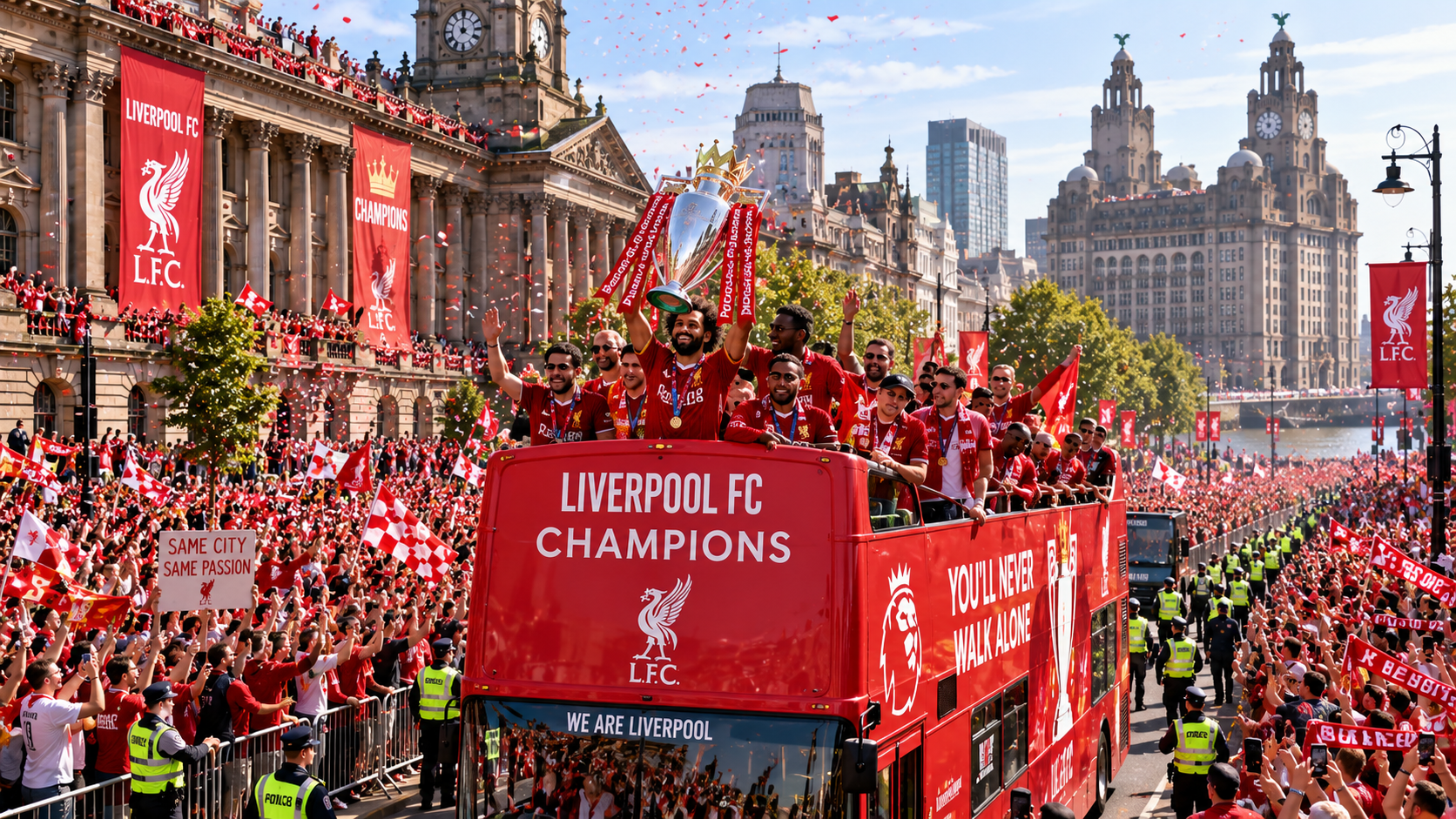
Winning a major trophy creates a practical problem: only a fraction of supporters can be inside the stadium or final venue. Victory parades solve that by bringing the team into public space. Open-top buses, civic squares, balconies, and city-center routes turn private achievement into mass celebration.
The parade connects club identity with geography. Streets become temporary extensions of the stadium, and landmarks provide a backdrop for photographs that may define the season in collective memory. Local government, police, transport agencies, and emergency services become part of the event because enormous crowds require planning.
Modern parades are also broadcast spectacles. Players film from buses, supporters stream from the route, and clubs publish behind-the-scenes content. A local celebration can therefore reach a global audience in real time.
A successful club can function as a symbol of place even when its players and supporters are internationally diverse. The parade allows civic identity and sporting identity to overlap. Businesses decorate windows, families bring children, and people who rarely attend matches may still participate. That broad ownership explains why victory parades feel different from ordinary club events: the city itself becomes the venue.
Why a parade feels different from a stadium ceremony
A trophy lift belongs to the competition venue, while a parade brings success back into the everyday geography of the club’s community. Streets, bridges and civic buildings become temporary extensions of the stadium.
That shift lets people who never had a match ticket participate in the season’s emotional climax. The city itself becomes part of the visual story.
The route is symbolic
Organizers choose roads and landmarks that supporters recognize, which turns geography into narrative. Passing the stadium, city hall or central squares can link sporting achievement with local history.
The photographs become durable because place is identifiable even years later. A parade therefore produces memory through location as much as through the trophy.
Crowd planning is a serious operation
Hundreds of thousands of people moving through open streets create different risks from a seated stadium crowd. Transport closures, barriers, medical access, weather and crowd surges must be considered.
Celebration cannot simply be announced and left to organize itself. The more successful the club and accessible the route, the more event planning matters.
Parades broaden the definition of supporter
Families, tourists and residents who rarely attend matches may join because the event represents the city as well as the club. This creates a more mixed crowd than a normal home fixture. That makes parades broaden the definition of supporter a genuine turning point in the wider story of Victory Parades rather than a minor historical detail.
Businesses decorate windows and public institutions often participate. The celebration reveals how successful clubs can function as civic symbols beyond their core matchgoing audience.
Broadcasting changed scale
Television once extended the view to homes; now supporters and players stream continuously from phones on the bus and in the crowd. That multi-perspective coverage makes the event feel less centrally controlled.
It also increases the chance that mistakes or controversial behavior become global stories instantly. The modern parade is simultaneously a local ritual and a worldwide live media event.
Timeline: Key Turning Points
Period Development Why It Mattered
Early civic celebrations Successful teams were welcomed at stations, town halls and public squares. Sporting success was linked with local pride.
Open-top bus era Bus parades created a mobile stage through city streets. Large crowds could see players without one fixed venue.
Television era Live coverage extended the parade beyond those physically present. Civic ritual became media spectacle.
Mass-event planning Crowd management and transport planning became more formal as attendances grew. Parades became major public-safety operations.
Social-media era Players and supporters broadcast the route from multiple perspectives. A local celebration now produces global real-time content.
Why This Still Matters
A victory parade turns sporting success into a temporary civic event. The route, crowd size, landmarks and speeches place a club’s achievement inside the geography of its city, allowing people without match tickets to participate in the celebration. That scale creates logistical responsibilities involving transport, barriers, emergency planning and public services. The parade’s cultural power comes from the same feature that makes it operationally difficult: it converts a team’s private trophy moment into a shared public memory.
Because parades are rare, they can become reference points for generations of supporters. Photographs of a bus passing a familiar landmark often outlive the details of individual league matches from the same season. That helps explain why clubs and cities invest so much effort in planning them. A parade is not only a celebration of the result; it is a way of giving success a physical location in collective memory.
Common Misconceptions
Victory parades are just spontaneous street parties.
Large modern parades usually require extensive planning by clubs, police, transport agencies and local authorities.
Only regular matchgoing supporters attend.
Parades often attract a much wider civic audience, including families and residents who rarely enter the stadium.
Social media made parades more important than before.
The ritual is older; digital media changed its reach and documentation rather than creating the basic idea.
Related SwiftPeakX Reading
Goal Celebrations: How Scoring Became a Language of Emotion and Identity
Fan Zones: How Public Viewing Spaces Changed the Way Supporters Gather
The Voice of the Stadium: How PA Announcers Shape the Matchday Experience
Frequently Asked Questions
Why are open-top buses commonly used?
They create a moving elevated platform that allows players to be seen along a long route.
Who organizes a football victory parade?
Usually the club works with local government, police, transport and emergency services.
Why are routes sometimes changed at short notice?
Crowd estimates, security information, road conditions and operational needs can affect the final plan.
What makes a parade part of club history?
Its scale, route, images and connection to a specific trophy-winning season can turn it into a shared reference point for generations.
Parades Turn a Title Into Civic Memory
First comes Early civic celebrations. Successful teams were welcomed at stations, town halls and public squares. Sporting success was linked with local pride.
Then comes Open-top bus era. Bus parades created a mobile stage through city streets. Large crowds could see players without one fixed venue.
Another important entry is Television era. Live coverage extended the parade beyond those physically present. Civic ritual became media spectacle.
The next major step appears under Mass-event planning. Crowd management and transport planning became more formal as attendances grew. Parades became major public-safety operations.
The final entry is Social-media era. Players and supporters broadcast the route from multiple perspectives. A local celebration now produces global real-time content.
What Changed—and What Stayed Recognizable
Comparing Early civic celebrations with Social-media era makes the scale of change in Victory Parades easier to judge. Early in the story, successful teams were welcomed at stations, town halls and public squares. Sporting success was linked with local pride. By the later stage, players and supporters broadcast the route from multiple perspectives. A local celebration now produces global real-time content. For Victory Parades, that contrast matters because the modern practice inherited an older purpose even though the tools, expectations or institutions around it had changed.
One way to test that continuity is to revisit the misconception that victory parades are just spontaneous street parties. Large modern parades usually require extensive planning by clubs, police, transport agencies and local authorities. For Victory Parades, correcting that misconception matters because it separates the enduring purpose from details that changed over time. For Victory Parades,
The Bottom Line
There is no single moment that created the modern form of Victory Parades. The timeline begins with Early civic celebrations: successful teams were welcomed at stations, town halls and public squares. It ends with Social-media era: players and supporters broadcast the route from multiple perspectives. For football victory parades, the path between them makes present-day arguments easier to evaluate because it shows which problems each change was meant to address.
Sources & Further Reading
FIFA Museum — Football culture and memory
UEFA — Club competition history
Football Supporters Europe